A procedural image is more than its exported pixels. It has a construction rule, a set of inputs and a sequence of choices that lead to a particular result. If the maker wants to return to that composition after several weeks, an isolated image file may not be enough. Recovering the underlying conditions can be difficult even when the code used to produce the drawing still exists. Reproducibility is the ability to generate the intended output again from a recorded description, or at least to reconstruct the essential visual relationships when the rendering environment has changed.
Distinguish a finished image from its source record
A finished raster image preserves the samples that were produced at one moment. It can be displayed, copied or resized without the original program. Its value as an artwork is not diminished by the absence of construction information. A project record serves a different purpose: it permits the artist to regenerate the composition at another size, inspect a particular decision or make a deliberate variation. Saving a project record alongside its exported image is particularly valuable when the work is part of an ongoing series whose future members will use the same rules.
In a simple curve generator, the source record should identify the drawing dimensions, margin, curve function and values such as amplitude, frequency, phase and stroke width. Add the number of curves, their spacing rule and their drawing order. A curve placed on top of another can produce a different appearance even when their individual geometry has not changed. The color values, their assignment rules and any transparency settings also belong in the record. If the composition is cropped, retain the rectangle used rather than expecting to remember which portion of the original field appeared interesting.
Control the parts of the generator that vary
A program often uses random values to produce irregular spacing or select details. Calling a random-number routine on each render may provide a lively viewing experience, but it makes recreating a favorite result difficult. A deterministic pseudo-random generator creates a sequence from an initial seed. If the sequence, algorithm and call order are unchanged, the same seed can produce the same choices again. The seed is therefore a compact representation of a potentially large collection of variable decisions.
A seed alone, however, cannot identify every condition that influences the image. Imagine inserting a new random choice near the beginning of a loop to select a background color. That small addition consumes a value from the sequence, so the positions of all subsequent curves may change even if the original seed is retained. One solution is to use independent sequences for unrelated groups of choices such as placement, stroke styling and palette selection. Another is to save the final parameter values explicitly when a candidate is selected. The latter is particularly useful for a modest drawing with only a few dozen important variables.
Related reading: Designing interactive visual sketches for the web.
Where many objects are generated, assign each one a stable identifier, and derive repeatable variation from that identifier and a master seed if appropriate. Removing or inserting one object then need not alter every object following it. Consider a composition with hundreds of concentric motifs and occasional highlights. It may be desirable to vary the placement without changing which motifs are emphasized. Independent variation mechanisms make such experiments easier to conduct because the artist does not have to restore several unrelated properties manually after a single modification.
Define what counts as the same picture
Not all projects require pixel-for-pixel identity. The objective for a geometry-based piece may be to preserve curves, layout and color assignments while allowing smooth rendering to improve on a new display. A texture-based composition may require more exact matching because small differences accumulate into a visibly different image. Before building an extensive archive, decide what properties are worth preserving and how exact the comparison should be. This will determine whether it is sufficient to keep a parameter record or necessary to capture additional dependencies and a known rendering environment.
Differences in numerical rounding, coordinate transforms, antialiasing, color management and compositing can affect final pixels. Even if a saved recipe recreates identical geometry, two environments may render the edge of a thin line slightly differently. For precise regeneration, save the program version, relevant rendering settings and the final exported reference. Compare a new output against that reference and inspect meaningful differences at the intended display size. A small difference in antialiasing is not equivalent to the movement of an entire object, so use a comparison appropriate to the properties being protected.
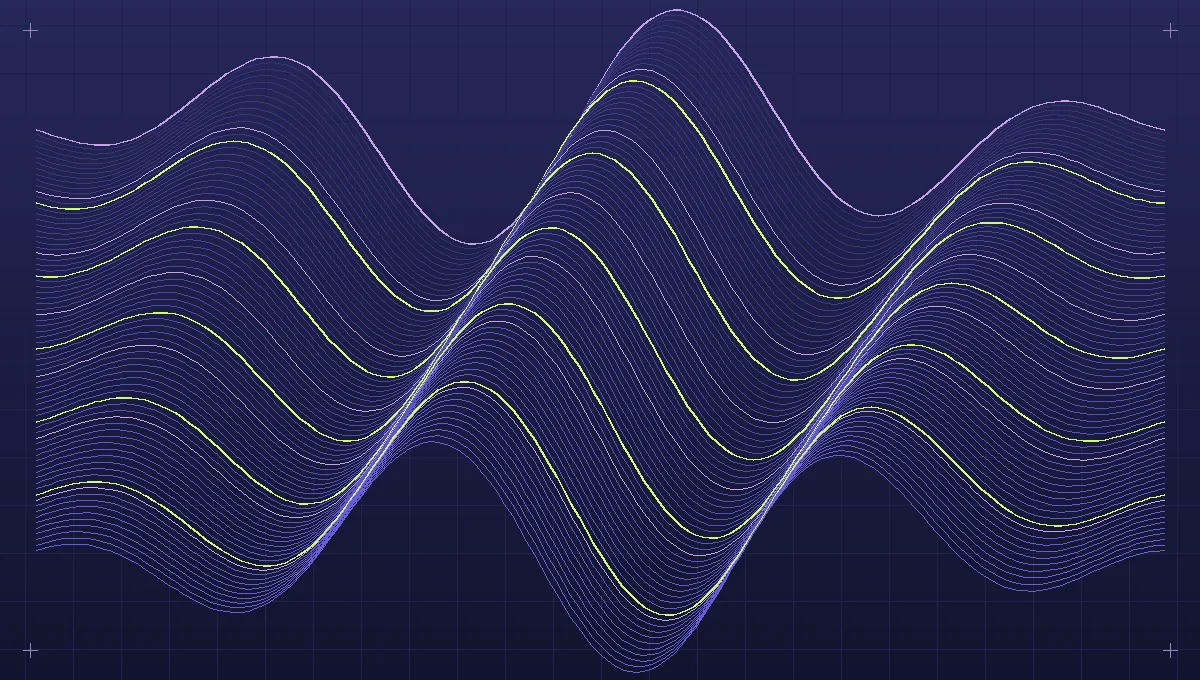
A compact example of a recipe
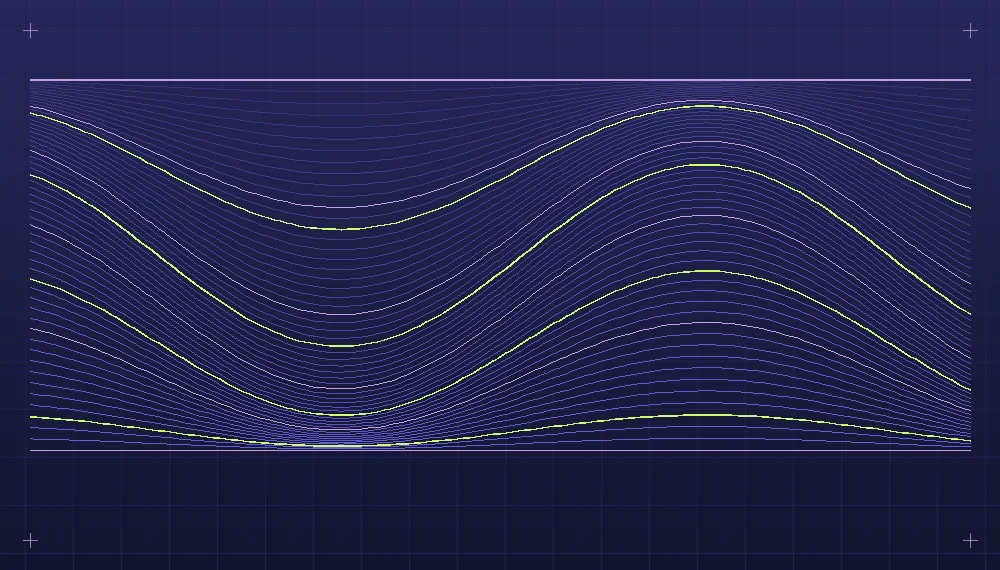
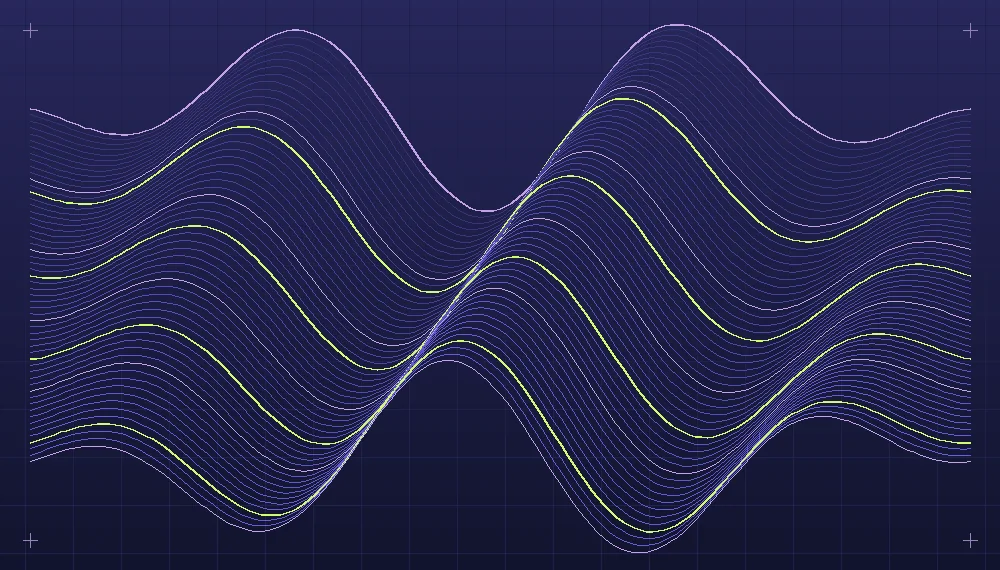
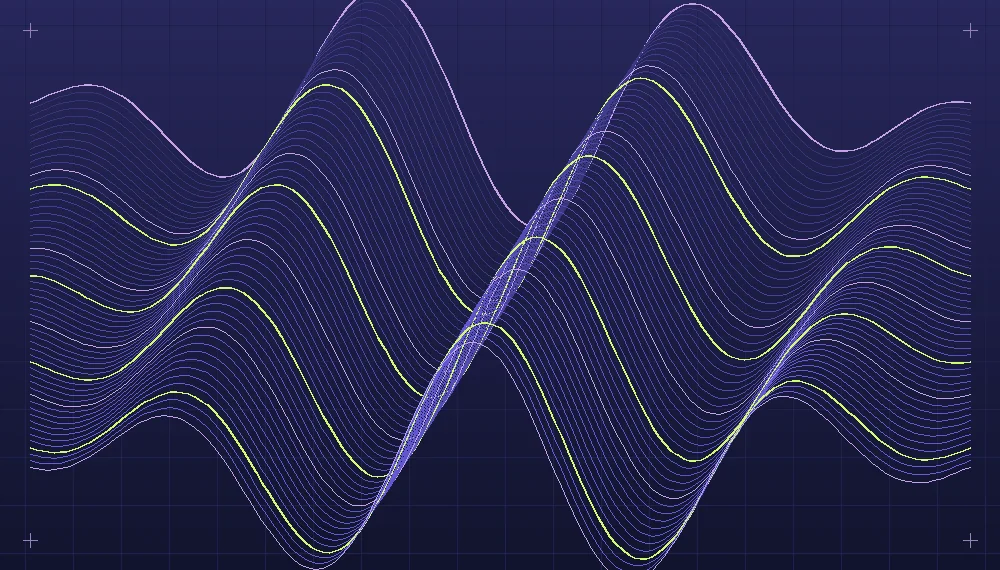
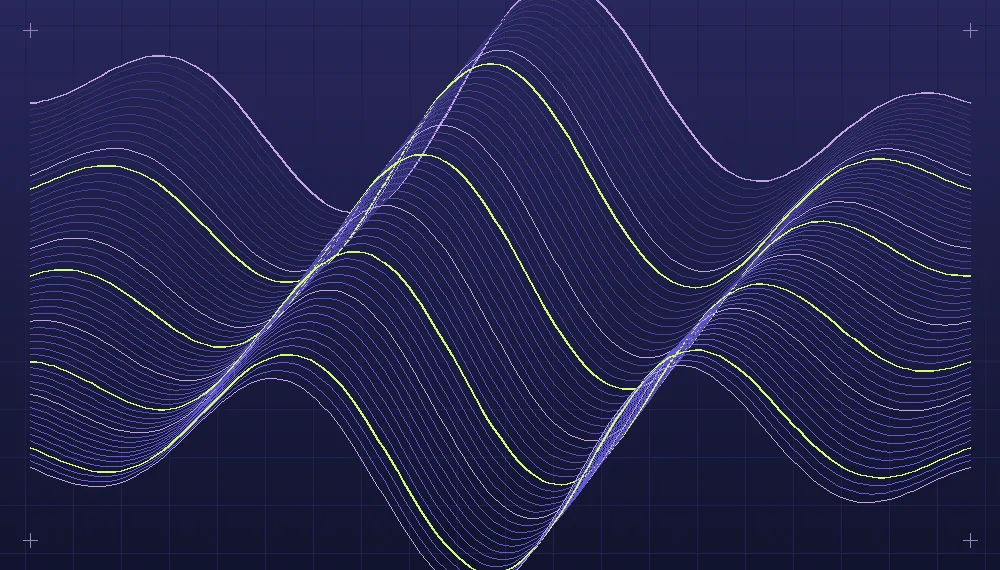
Assume an artist chooses a line composition from a collection of many variants. The selection record contains a 1,200 by 800 reference canvas, a 70-pixel left and right margin, forty-five strands, a primary and secondary stroke width, the selected palette, and a formula controlling the bends. It records the identifier of the formula's version and the seed used to place highlights. A preview image sits next to the exported original. A short note explains that one dense area near the lower left is the intended focus and why this composition was selected over its neighbors.
Later, a wider version is needed for a different page layout. The original aspect ratio can be kept by fitting the reference drawing inside the new frame, or the normalized coordinates can be mapped to a wider field and a new export deliberately created. If the wider drawing is considered a new composition, give its record a new identifier with the original as its parent. That distinction avoids overwriting the record of the selected work. It also makes experimentation less risky because there is a clear way back to the earlier version.
Run a regeneration check before the archive grows
Choose two or three saved works, reconstruct each using only the recorded information and compare them with their reference exports. Do not load the live project state from which they were originally generated, because hidden values in that session can conceal gaps in the record. If regeneration requires guessing an omitted parameter, add the parameter to the recipe. If it requires finding an older algorithm implementation, record how versions of that implementation are retained. When possible, automate checks on the geometry or parameter output before the raster layer is applied.
It is also valuable to request a small intentional change during this test. Adjust one value, such as line spacing, and examine which visible features change. If a spacing edit completely rearranges the colors or chooses a new texture, the variation mechanisms are coupled in ways that may make later art direction difficult. This is not necessarily a defect if the interdependence expresses the underlying artistic rule. It is a reason to document the relationship and decide whether future experimentation requires an independent control.
If reference images are assessed automatically, a checksum can establish whether two complete files match exactly. It cannot establish whether images with different encoding or small rendering differences have equivalent artistic content. Record the type of comparison being performed and retain visual inspection for differences that require judgment.
A sustainable record is one the artist will actually maintain
Requiring an extensive report for every quick sketch creates friction, so distinguish exploratory work from approved pieces. A generator can save the recipe automatically whenever an export is produced. The artist can then add brief notes only to selected candidates. Keep a sensible naming system that identifies each work without relying on temporary file names. Preserve the final images independently of the ability to run the generator. With these modest habits, a procedural collection becomes an archive of creative decisions rather than a folder of attractive but irretrievable accidents.
Explore the implementation area: Artificial art and generative design.