A random choice is an invitation, not an artistic direction. In creative coding it can offer a surprising arrangement of forms, suggest an unexpected combination of colors or disturb a regular structure. But a generator with little control over its choices tends to produce a very wide range of results, much of which may fall outside the maker's intention. Controlled randomness begins with a distinction between the properties that express the idea and the properties allowed to vary. The aim is not to eliminate surprise; it is to make the surprise belong to the work.
Define the identity of the system
Think of a program that draws rows of narrow rectangles across a dark field. One version shifts their horizontal positions, chooses a new width for every rectangle and varies the colors. Another retains a constant width and palette while allowing the spaces between rectangles to change. The second version may have fewer numerical possibilities, yet it might be more productive as an artistic study because the effect of spacing can be observed clearly. Write down which visible properties must remain stable across outputs, and why those properties matter to the intended collection.
It is useful to separate the structure from incidental styling. The structure might be a repeated diagonal direction, an arrangement around a central opening or a regular field interrupted in one region. Colors and stroke weights can reinforce the structure, but if they change independently on every render they may obscure it. Decide which variables define the composition and which variables are suitable for variations in detail. An initial generator could expose only one or two uncertain parameters while holding the others constant. This establishes a recognizable visual foundation without preventing later changes.
Choose ranges according to visual outcomes
A random range is not inherently meaningful because its numbers are conveniently round. Suppose the program draws a network of curved connections between spaced nodes. If the allowed displacement of each node is very small relative to the interval between nodes, the resulting structures remain similar. If the displacement is large enough for distant nodes to overlap, some drawings may acquire unexpected crossings or lose the spaces that defined the original idea. Render the smallest and largest possible displacements in a deliberately difficult arrangement. The images reveal whether the numeric limits correspond to an acceptable visual range.
Uniform sampling treats every point in the range as equally likely. That may not suit a project in which moderate values are useful most of the time and stronger variations should be occasional. One simple alternative is to average two or more independent samples, which makes values around the middle more frequent than values at the extremes. Another is to choose between predefined ranges according to explicit proportions. A third possibility is to generate a group-level value and let related objects make small variations around it. Different sampling schemes can produce a recognizable difference in the character of the whole output.
Related reading: Generative lines as a visual language.
Correlate choices rather than scattering them
Many visual arrangements rely on relationships between elements. Randomly choosing the size of each shape may destroy the intended pattern, while choosing a gradual size progression and adding small deviations can preserve it. In a row of ascending forms, let the index establish the approximate scale, then use a seeded value to alter it within a narrow margin. The overall movement remains legible even though no two individual shapes need be identical. The deterministic relationship provides the structure; variation adds texture and individuality to that relationship.
A similar approach works with palettes. Choose one of a few background and structural-tone combinations, then introduce smaller color changes within those roles. A limited number of accent objects may be selected using a rule tied to geometry rather than an independent choice for every object. The output retains a visual logic even when the individual details are not predictable. This is particularly important when the generated images appear together on a page, because a viewer experiences their differences in relation to the rest of the collection.
Explore deliberately with seeds
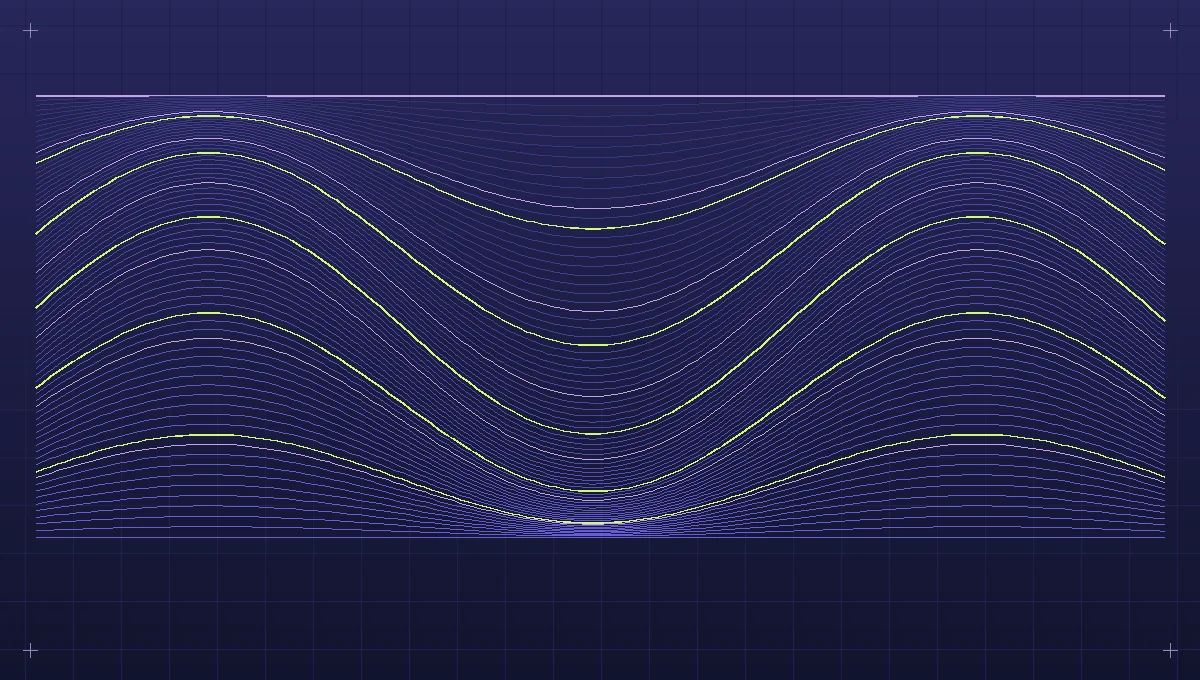
A seeded pseudo-random sequence permits a chosen arrangement to be generated again under the same conditions. For exploration, assign a reproducible seed to each candidate and save the relevant parameter choices. The artist can then render the same group repeatedly while adjusting only the permitted range of one variable. If every preview comes from unrelated random input, it is difficult to tell whether a revised range made the work stronger or simply happened to produce an attractive example. A consistent seed set makes the comparison fairer and saves time when the artist wants to return to a particular image.
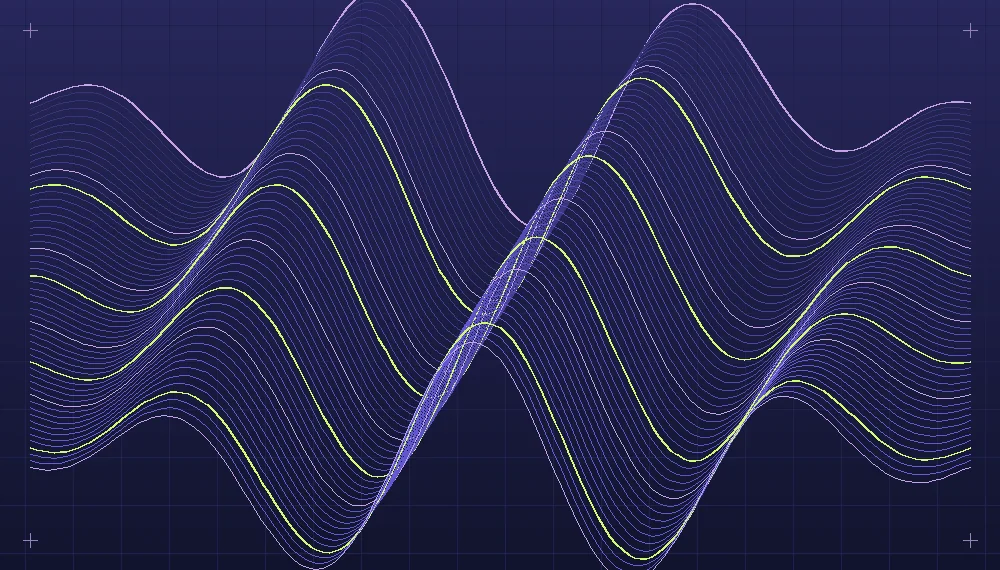
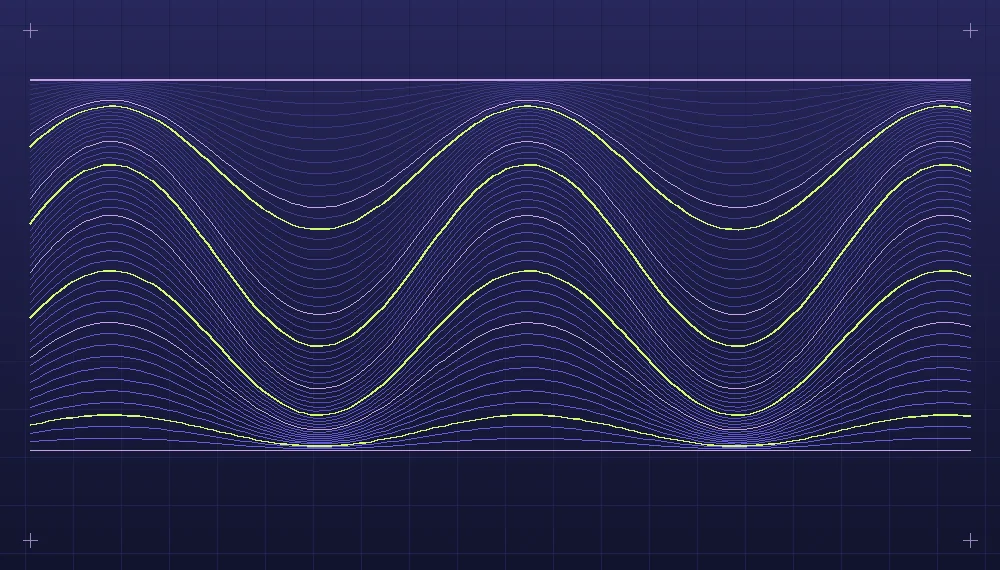
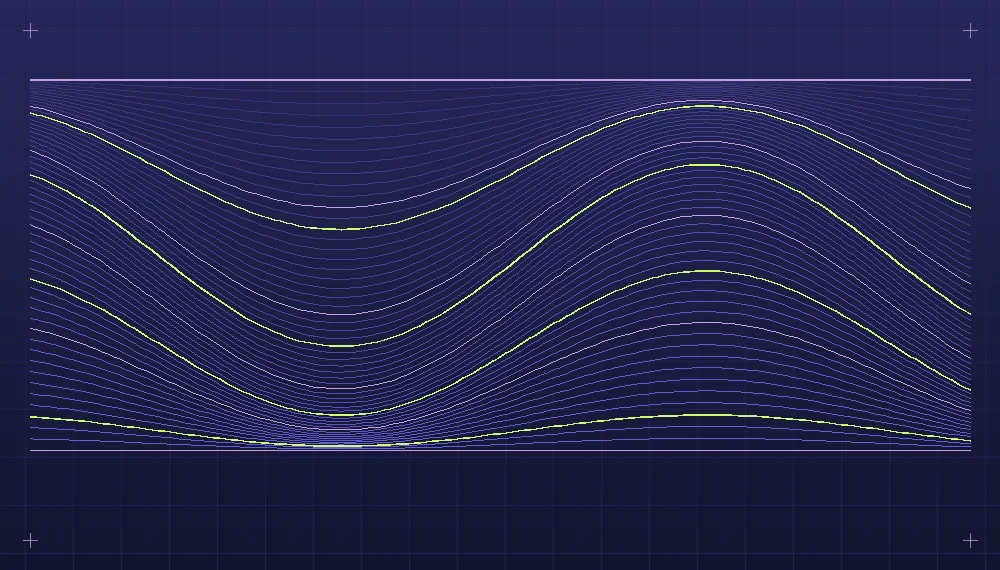
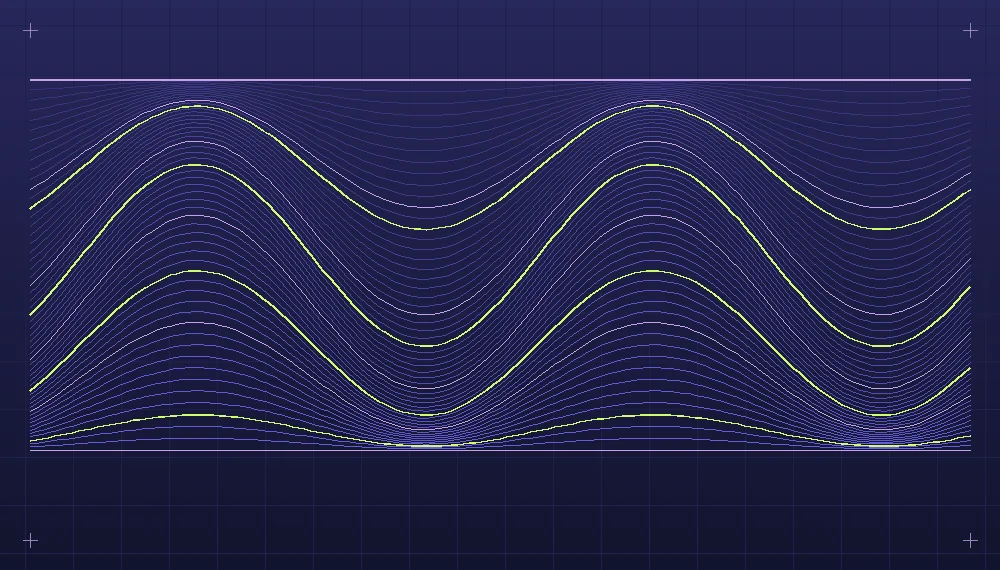
For a small exercise, generate twenty variants of a drawing whose curves share one displacement envelope. Keep the line count and stroke roles constant. In the first pass, let the curve amplitudes vary within a broad interval. In the second pass, use the same seeds but select amplitudes from a narrower interval centered near the most useful range. Lay out both groups in matching columns and compare paired results. Record which versions lose their intended negative space and which seem excessively regular. This comparison should guide a further adjustment, not merely a choice of the prettiest individual rendering.
A useful refinement is to reserve some seeds specifically for inspection after the range is chosen. If every adjustment is based on twenty familiar examples, the system may gradually become suited to those examples without dealing well with the rest of its possibilities. Generate a fresh set of ordinary candidates and inspect several in detail. This is not a formal statistical claim about the quality of art. It is a practical way to avoid drawing conclusions from a limited gallery and to notice recurring problems in unfamiliar outputs.
Handle unacceptable outcomes explicitly
Some conditions are simple to check before a drawing is rendered, such as an empty group, an object outside an allowed region or a negative size. Other judgments, such as whether the composition feels crowded or has a convincing focal point, require visual review. Distinguish hard constraints from preferences. A hard constraint can be built into the generation rule directly rather than addressed by repeatedly discarding unusable candidates. A preference can be explored through sorting, comparison or an interactive selection stage. Avoid shrinking every range until only one arrangement looks acceptable; a collection built that way has little room for discovery.
Occasionally it is worth breaking one of the fixed rules as an explicit experiment. Save the original conditions, generate the changed family separately and decide whether the change reveals a stronger idea. An exception developed consciously should not quietly become another uncontrolled variable in the main series.
Keep the output inspection distinct from the production of candidates. Even a fast generator can make comparison tedious if its images are constantly reordered. A saved contact sheet with seeds and range labels provides a stable surface for reviewing a family before that family is replaced by another one.
Document what the variation is doing
When an interesting outcome emerges, save more than the seed if the generator is evolving. Retain the ranges, selection relationships and version of the construction rule associated with the output. Give each chosen work a concise description of the property that makes it worth keeping. One might be selected for its spacious arrangement, another for an unusually dense transition that still preserves the primary direction. Such notes reveal whether the system is actually exploring useful differences or repeating a single appealing solution. Controlled randomness is most rewarding when the generated range can be read as a coherent artistic idea, not when success depends on producing thousands of arbitrary images and hoping a few will be suitable.
Explore the implementation area: Artificial art and generative design.