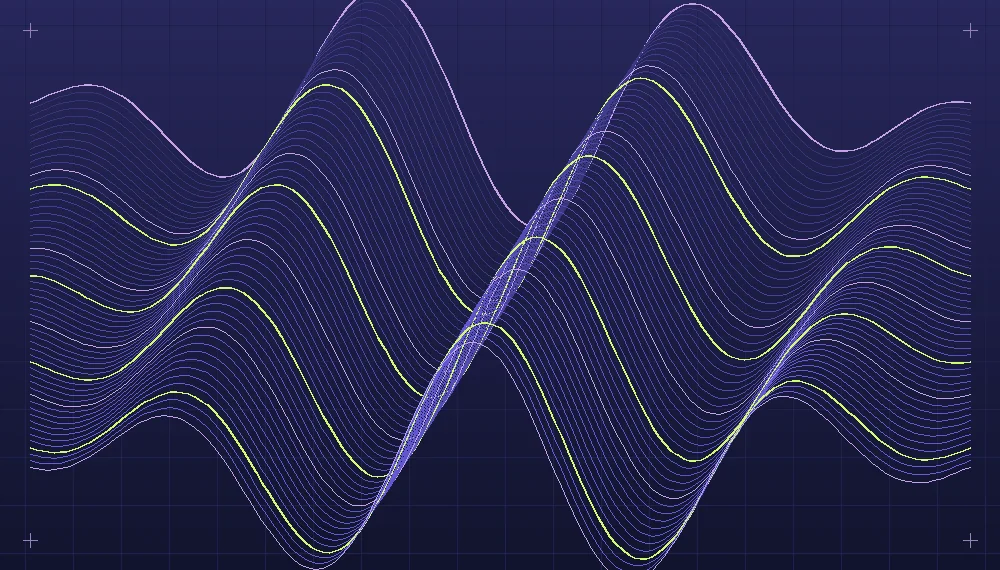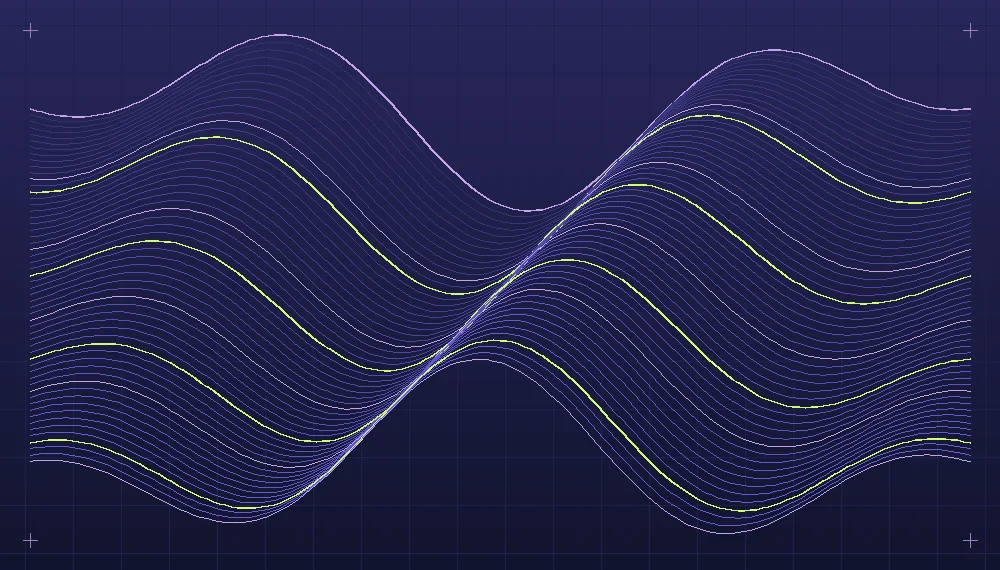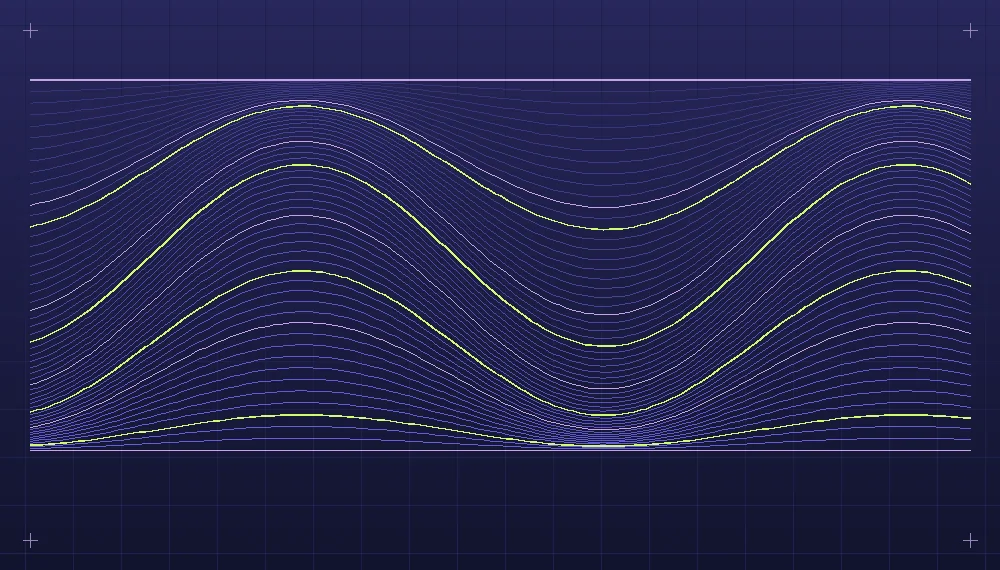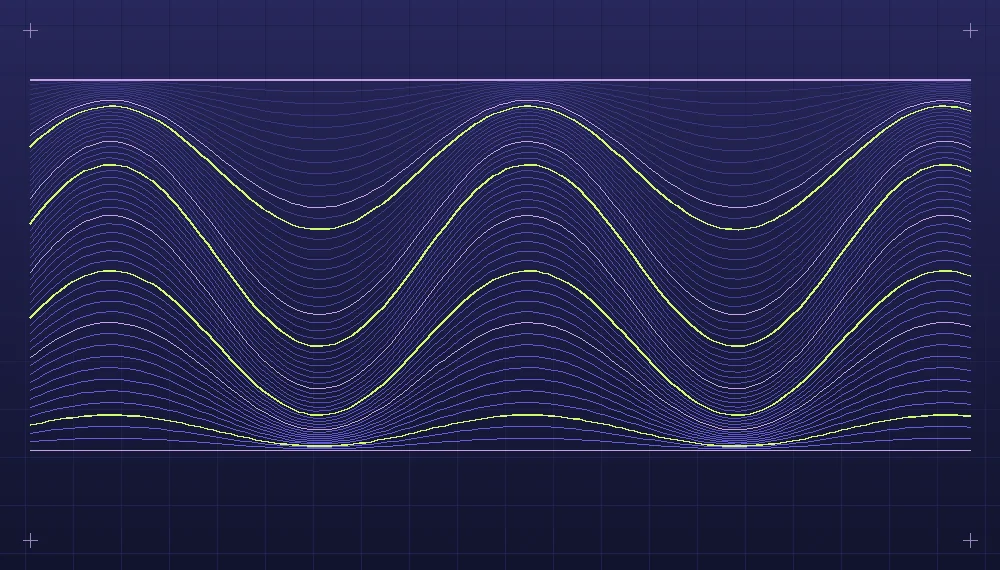
A generative system may be able to produce hundreds of images in the time it takes an artist to examine a handful carefully. The resulting abundance is useful because it opens possibilities, but it shifts part of the work into selection. Curating an artwork series is not simply a process of keeping every attractive output. A collection has its own rhythm, boundaries and argument about the system that produced it. Individual images should reveal meaningful differences while remaining related strongly enough to be understood as parts of the same body of work.
Describe the series before choosing its members
Write a short description of what the works share. It could be a geometric rule, a recurring arrangement of curves, a constrained family of colors or a question about how a shape changes under repeated operations. Make the description specific enough to exclude some outputs. A collection called variations generated by a computer says little about why one image belongs beside another. A collection exploring how horizontal strands bend around a moving opening describes a relationship that can actually be observed and compared. The description can change as the artwork develops, but it gives the first selection a direction.
Identify a few dimensions of variation. A line-study system may vary curve amplitude, density, framing and palette. For the collection under consideration, perhaps the density and curve amplitude are the important features, while the palette stays fixed. Other changes can be documented but should not dominate selection. These dimensions create practical groupings within a large output set. They help an artist see whether a collection repeatedly exhibits the same feature, even when the individual arrangements appear different in isolation.
Separate exploration from selection
During exploration, preserve a broad range of candidates including some imperfect examples. Save their reproducible parameter records along with fast previews. It is tempting to delete every image that fails the first glance, but a weak composition may reveal something important about the limits of the rule. Keep enough examples of those limits to recognize recurring problems. Once the generation process has reached a useful stage, set aside a selection session in which no new images are generated. This prevents an endless search for novelty from distracting from comparisons among the material already available.
Use a contact sheet that presents candidates at the same size and on the same neutral surface. If some images use significantly different aspect ratios, either maintain their proportions in equally sized frames or mark the differences explicitly. Do not let the size of a preview alone determine which work seems most prominent. Review groups in relation to their parameters, but also try arranging some without the labels to compare the actual visible differences. Two outputs produced from very different values can look surprisingly similar, while nearby values may produce a notable transition.
Related reading: Generative lines as a visual language.
Find the roles a series needs
A collection benefits from a few pieces that communicate the basic visual system immediately. These might be its simplest or clearest outcomes. More complex pieces can follow, revealing boundaries, intersections or combinations that become meaningful after the viewer has seen the underlying structure. An unusual variant may add interest by demonstrating the range of the generator. If all selected works compete to be equally surprising, the relationships that make the surprises meaningful can become difficult to identify.
Some selected works may provide a visual pause. Consider a sequence of dark compositions with dense curved lines. An image with a much quieter region may appear less intricate when judged alone, yet it can provide contrast within the collection and make the neighboring pieces easier to appreciate. A strong series does not require every member to maximize the same visual attribute. It requires each member to have a recognizable contribution. Write a brief selection note for every candidate explaining that contribution before deciding on the final set.
A worked selection from twenty-four line studies
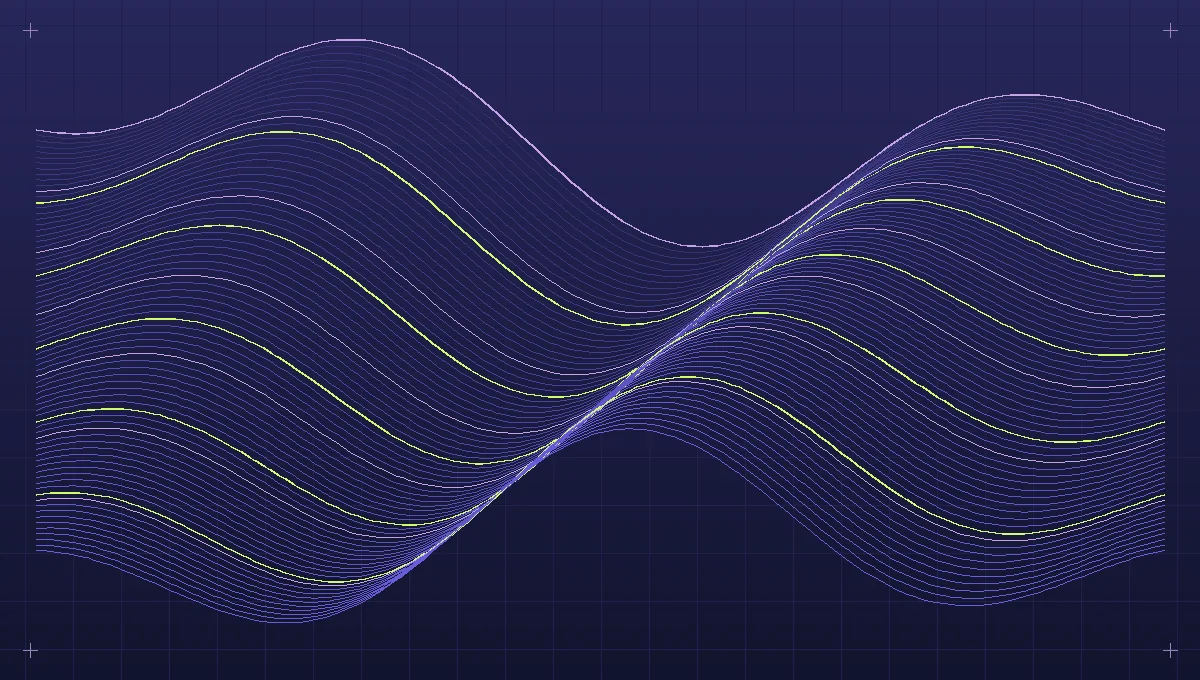
Imagine a generator that creates twenty-four images with a common background, line weight and horizontal field. Eight use a modest curve displacement, eight use a moderate displacement and eight explore the largest permitted displacement. Begin by laying out the candidates in three rows. Compare the weakest and strongest examples within each row. In the moderate group, several images may differ only in the location of a small highlight. Retain the one or two whose overall region of focus is most clearly expressed, rather than choosing several almost identical pictures simply because their details differ.
Next, identify unusual candidates in the outer ranges. The modest group might contain one composition with generous negative space and a clean directional structure. The strongest group may have an image whose curves intersect in a compelling way while preserving the underlying field. It may also contain several examples that merely look crowded. Select a manageable number of pieces from across the ranges and lay them out in a single sequence. Notice where similar works occur consecutively and where a very large change appears suddenly without a useful relationship to the preceding composition.
Try more than one order. One sequence can move from the most orderly condition toward the edge of complexity, highlighting gradual transformation. Another can alternate stronger and quieter works to create a visual rhythm. The first order may clarify how the rule operates; the second may make the presentation more engaging as a gallery. Neither is inherently more accurate. The choice depends on whether the series emphasizes the progression of the system or the selected artwork's relationships as a collection. In either case, inspect the first and last pieces particularly carefully because they frame the viewer's encounter with the group.
Watch for differences that matter only to the maker
A computational artist may know that two images differ by a precise mathematical change, but viewers do not normally inspect parameter records before considering a composition. A relationship visible only in the source code may be valuable for a technical demonstration rather than a gallery sequence. If it is important to preserve such a comparison, explain the rule briefly and show the specific details in a focused presentation. The finished art series can remain compact while a separate process note documents the broader investigation. This gives the technical work its due without making the viewer wade through redundant pictures.
After creating the shortlist, view it once without the images you originally considered indispensable. An alternative arrangement may reveal that a familiar favorite is not needed in this particular series. Individual strength and contribution to the whole are related judgments, but they are not identical.
Preserve decisions and leave room for new work
Record the final sequence, the source identifiers and the composition choices associated with each member. Keep the rejected candidates separate rather than allowing them to reappear accidentally during a later export. If a new piece is introduced, inspect it in relation to the existing series instead of appending it automatically. It might require moving a neighboring work, creating a new ending or establishing a separate group. A curated collection can evolve, but a record of its earlier versions maintains the connection between a particular presentation and the artistic decision behind it.
The most rewarding selection often emerges after a break from generation. Returning to a shorter set of images makes it easier to notice relationships that were invisible while the program was producing new candidates. A series becomes coherent through repeated looking, comparison and restraint rather than through its sheer volume. The large output space remains available for future exploration, while the chosen pieces give viewers a meaningful way into that space. Selection is therefore not an administrative task carried out after computational art is complete; it is part of the process by which the art takes its final form.
Explore the implementation area: Artificial art and generative design.